 Durba TV academic Website
Medical insurance waiting periods are crucial timeframes insurers use to delay coverage for certain conditions or treatments. Knowing these rules helps you avoid surprise claim denials and choose the right policy. This guide explains everything from standard waiting periods to exceptions and how to plan around them.
Key Takeaways
- Waiting periods vary by insurer and policy type: Most plans have 30–180 days before major conditions are covered, with some requiring up to 12 months for pre-existing conditions.
- Pre-existing conditions are a major factor: If you had a condition before enrolling, it may not be covered until the waiting period ends or you meet specific criteria.
- Some benefits start immediately: Basic services like maternity, accidental injury, or emergency care may be covered right away, even if major illnesses are delayed.
- Waiting periods differ by state and plan type: Short-term, employer-sponsored, and individual market plans have varying rules based on regulations and policy terms.
- You can reduce waiting periods with continuous coverage: Switching from one plan to another without a gap may shorten or eliminate certain waiting periods.
- Read the fine print: Always review your policy’s definition of “waiting period,” exclusions, and grace periods to avoid surprises.
📑 Table of Contents
- Medical Insurance Waiting Period Rules You Should Know
- What Is a Medical Insurance Waiting Period?
- Types of Waiting Periods in Health Insurance
- How Long Do Medical Insurance Waiting Periods Last?
- How to Avoid Claim Denials Due to Waiting Periods
- Common Myths About Medical Insurance Waiting Periods
- Real-Life Examples of Waiting Periods in Action
- How to Choose a Plan with Shorter or No Waiting Periods
- What Happens After the Waiting Period Ends?
- Conclusion: Be Proactive About Your Health Coverage
Medical Insurance Waiting Period Rules You Should Know
Let’s face it — nobody enjoys talking about medical insurance waiting periods. It’s not the most exciting topic, but it’s one of the most important parts of understanding your health coverage. If you’ve ever been denied a claim because your condition “wasn’t covered yet,” you’ve probably encountered a waiting period in action. These rules exist for good reason: they help insurers manage risk and ensure that coverage is used responsibly.
But here’s the thing: waiting periods aren’t all bad. They’re just part of the bigger picture of how medical insurance works. The key is knowing what they are, how they apply to you, and how to plan accordingly. In this article, we’ll break down everything you need to know about medical insurance waiting period rules — from what they are and how long they last, to how to avoid common pitfalls. Whether you’re shopping for your first plan or reviewing your current coverage, this guide will help you make smarter decisions.
What Is a Medical Insurance Waiting Period?
A waiting period is a set time frame during which an insurance company does not cover certain medical services, treatments, or conditions. This delay is built into most health insurance policies to prevent people from signing up just after they’ve been diagnosed with a serious illness and then filing a claim. It’s a protective measure for both the insurer and the policyholder.
Visual guide about Medical Insurance Waiting Period Rules You Should Know
Image source: carepalsecure.com
How Waiting Periods Work
When you enroll in a health insurance plan, the insurer sets a waiting period for specific benefits. For example, a plan might say that maternity benefits are not available for the first 9 months. Or, it might delay coverage for heart surgery until the 180-day mark. During this time, if you need treatment for a covered condition, your claim may be denied — even if the illness or injury occurred after enrollment.
It’s important to understand that waiting periods apply only to certain services, not the entire policy. Routine check-ups, vaccinations, and emergency care are usually covered from day one. But for major conditions or planned procedures, you may need to wait.
Why Insurers Use Waiting Periods
Insurers use waiting periods for several reasons:
- To prevent moral hazard: This is when someone takes out insurance after they know they need treatment, hoping to get coverage for something they couldn’t afford otherwise.
- To manage risk: Serious illnesses are expensive. Waiting periods help insurers spread the financial risk across a larger pool of policyholders.
- To comply with regulations: In many countries, including the U.S., insurance laws allow waiting periods as long as they’re clearly stated in the policy and don’t discriminate unfairly.
While waiting periods protect the insurance company, they can also be a source of frustration for policyholders. That’s why it’s essential to read your policy carefully and ask questions before enrolling.
Types of Waiting Periods in Health Insurance
Not all waiting periods are the same. Different types apply to different services, and they can vary significantly depending on your plan and location. Let’s look at the most common types you’ll encounter.

Visual guide about Medical Insurance Waiting Period Rules You Should Know
Image source: lifeant.com
1. Pre-Enrollment Waiting Period
This is the most common type of waiting period. It applies to conditions or treatments that you had before enrolling in the plan. For example, if you were diagnosed with high blood pressure last year but didn’t have insurance until this year, that condition may not be covered until a certain number of days have passed since your enrollment date.
Pre-enrollment waiting periods typically range from 30 to 180 days, but some plans may require up to 12 months. The exact duration depends on the insurer, the type of plan, and whether you qualify for any exceptions (like being part of a group plan or switching from another policy).
2. Maternity and Newborn Care Waiting Period
If you’re planning to have a baby, this is one of the most important waiting periods to understand. Most individual health insurance plans do not cover maternity care during the first 10 to 12 months of coverage. This means if you get pregnant right after enrolling, your pregnancy-related expenses — including prenatal visits, delivery, and postnatal care — may not be covered until the waiting period ends.
However, employer-sponsored group plans are often required by law (under the Affordable Care Act in the U.S.) to cover maternity care without a waiting period. Always check your plan’s summary of benefits to confirm.
3. Accidental Injury Waiting Period
Some insurers offer immediate coverage for accidental injuries — meaning if you break your arm in a car accident on day one, the hospital bill could be covered. But this is not universal. Some plans may delay coverage for accidental injuries if they occurred within the first 30 days. It’s important to clarify this with your insurer, especially if you’re active in sports or have a high-risk job.
4. Chronic Condition Waiting Period
For conditions like diabetes, cancer, or heart disease, insurers may impose longer waiting periods — sometimes up to 24 months. This is because these conditions are expensive and often require ongoing treatment. During the waiting period, any related claims may be denied, even if the condition was diagnosed before enrollment.
5. Short-Term Health Insurance Waiting Periods
Short-term health insurance plans are designed to be temporary (usually 3–12 months) and often have shorter waiting periods — sometimes just 30 days. However, they typically exclude pre-existing conditions entirely and may not cover maternity, mental health, or prescription drugs. These plans are not ACA-compliant and are best for people between jobs or waiting for other coverage to begin.
How Long Do Medical Insurance Waiting Periods Last?
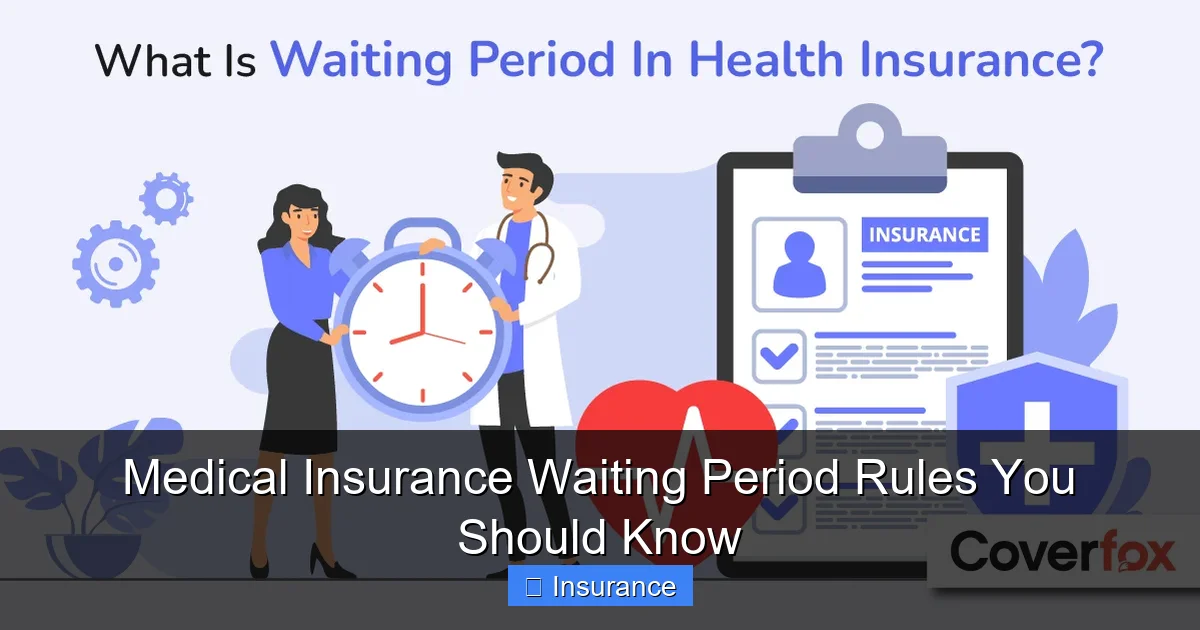
The length of a waiting period depends on several factors, including the type of plan, the insurer, and the specific benefit in question. Here’s a general breakdown of how long waiting periods typically last:
Visual guide about Medical Insurance Waiting Period Rules You Should Know
Image source: cms-img.coverfox.com
- Pre-existing conditions: 30 to 180 days (up to 12 months in some cases)
- Maternity coverage: 10 to 12 months
- Chronic or major illnesses: 6 to 24 months
- Emergency care: Usually immediate
- Routine check-ups and preventive care: Immediate
- Accidental injuries: 30 days (varies by plan)
It’s important to note that these are general guidelines. Some insurers may have shorter or longer waiting periods based on their underwriting policies. Always read your policy’s “Definitions” and “Exclusions” sections to get the exact details.
State and Federal Regulations
In the United States, health insurance waiting periods are regulated at both the federal and state levels. The Affordable Care Act (ACA) prohibits waiting periods longer than 90 days for most individual and group plans. However, it allows for longer waiting periods for specific benefits like maternity or chronic conditions — as long as they’re clearly disclosed.
Some states, like California and New York, have additional protections. For example, they may limit how long a plan can delay coverage for pre-existing conditions. If you live in a state with strong consumer protections, your waiting periods may be shorter than in others.
How to Avoid Claim Denials Due to Waiting Periods
The best way to avoid surprises is to plan ahead. Here are practical steps you can take to minimize the impact of waiting periods on your health coverage.
1. Enroll Early in the Open Enrollment Period
If you’re shopping for health insurance, try to enroll during the open enrollment period (usually November to January in the U.S.). This gives you the longest possible waiting period before any major life events — like surgery or pregnancy — occur. It also ensures you’re not left without coverage during a gap in employment or life changes.
2. Review Your Policy’s Waiting Period Schedule
Every policy has a “Schedule of Benefits” or “Summary of Coverage” that lists waiting periods for different services. Make sure you understand what’s covered and when. If something isn’t clear, ask your insurer or a licensed agent for clarification.
3. Keep Proof of Continuous Coverage
If you’re switching from one health plan to another, keep records of your previous coverage. Some insurers offer “creditable coverage” credits, which can reduce or eliminate waiting periods for pre-existing conditions. For example, if you had 12 months of continuous coverage before enrolling in a new plan, the new insurer may only require a 6-month waiting period instead of 12.
4. Use Preventive Care Early
Many plans cover preventive services like annual check-ups, mammograms, and vaccinations from day one. Take advantage of these services early in your policy term to catch potential health issues before they become serious — and before waiting periods kick in.
5. Consider a High-Deductible Plan with HSA
If you’re young and healthy, a high-deductible health plan (HDHP) paired with a Health Savings Account (HSA) might be a good option. These plans often have shorter or no waiting periods for basic care, and the HSA lets you save tax-free money for future medical expenses.
6. Appeal Denied Claims
If your claim is denied because it’s “within the waiting period,” don’t give up. Review the denial letter carefully. Sometimes, insurers make mistakes or misapply the rules. You have the right to appeal. Gather medical records, doctor’s notes, and proof of enrollment to support your case.
Common Myths About Medical Insurance Waiting Periods
There are a lot of misconceptions about waiting periods. Let’s clear up some of the most common myths.
Myth 1: “Waiting periods mean I’m not covered at all.”
False. Waiting periods only apply to specific services, not the entire policy. Emergency care, routine visits, and preventive services are usually covered immediately. Only certain major conditions or treatments are delayed.
Myth 2: “If I get sick right after enrolling, I can’t get any help.”
Not necessarily. If you have an emergency or sudden illness, you’re still covered for basic treatment. But for planned surgeries or chronic conditions, you may need to wait. Always check your plan’s rules.
Myth 3: “All insurers have the same waiting periods.”
No. Waiting periods vary widely by insurer, plan type, and state. One plan might have a 3-month waiting period for maternity care, while another has 12 months. Shop around and compare.
Myth 4: “Waiting periods are illegal.”
Not illegal — but they’re regulated. The ACA limits waiting periods, but insurers can still impose them as long as they’re fair and clearly stated. Just make sure you understand what’s included.
Real-Life Examples of Waiting Periods in Action
Let’s look at a few real-world scenarios to see how waiting periods work in practice.
Example 1: Sarah’s Pregnancy
Sarah just moved to a new city and enrolled in an individual health plan on January 15. She found out she was pregnant on February 1. Her plan has a 12-month waiting period for maternity care. That means her prenatal visits, ultrasounds, and delivery won’t be covered until January 15 of the following year. She’ll need to pay out-of-pocket or find another way to cover the costs.
Lesson: If you’re planning a family, enroll in a plan with a shorter or no maternity waiting period — or choose a group plan through work.
Example 2: Mark’s Heart Surgery
Mark has a history of high cholesterol and was diagnosed with early-stage heart disease in 2022. In 2023, he enrolled in a new insurance plan. The plan has an 18-month waiting period for pre-existing conditions. When Mark needs bypass surgery in June 2023, his claim is denied because the condition existed before enrollment and the waiting period hasn’t passed.
Lesson: If you have a known condition, look for plans that offer shorter waiting periods or “credit” for prior coverage.
Example 3: Lisa’s Accident
Lisa is a rock climber. On her first day of coverage, she slips and breaks her wrist. Her plan covers accidental injuries immediately. Her hospital bill is paid in full — no waiting period needed.
Lesson: Immediate coverage for accidents is common and valuable for active individuals.
How to Choose a Plan with Shorter or No Waiting Periods
Not all health insurance plans are created equal when it comes to waiting periods. Here’s how to choose a plan that works best for your needs.
Look for Plans with Shorter Waiting Periods
When comparing plans, pay attention to the waiting period schedule. Some insurers offer “no waiting period” plans for basic care, even if major conditions are delayed. Others may have shorter maternity waiting periods (e.g., 6 months instead of 12).
Consider Employer-Sponsored Plans
Group plans through employers often have shorter or no waiting periods, especially for maternity and preventive care. They’re also more likely to offer creditable coverage for pre-existing conditions.
Check for “Guaranteed Issue” Plans
Some plans are guaranteed issue, meaning they can’t deny coverage based on health status. These plans may still have waiting periods, but they’re more accessible for people with pre-existing conditions.
Use Health Insurance Marketplaces
In the U.S., the Health Insurance Marketplace (Healthcare.gov) allows you to compare plans side by side. You can filter by waiting periods, deductibles, and coverage types. Many plans offer subsidies to make coverage more affordable.
Consult a Licensed Agent
A licensed insurance agent can help you understand waiting periods and find a plan that fits your health needs and budget. They can also explain how switching plans affects your coverage.
What Happens After the Waiting Period Ends?
Once the waiting period ends, your coverage for specific services becomes active. But it’s not a one-time event — it applies to all future claims for that condition or service, as long as you remain enrolled.
For example, if you have a 6-month waiting period for diabetes-related care, any claims after that date — including insulin, glucose monitors, and specialist visits — will be covered, assuming the condition was diagnosed before enrollment and the waiting period has passed.
It’s also worth noting that some plans have “recurring” waiting periods. This means that if you develop a new case of a condition that was already covered, the waiting period may apply again. Always check your policy for details.
Conclusion: Be Proactive About Your Health Coverage
Medical insurance waiting periods can feel like a hurdle, but they’re not insurmountable. By understanding how they work, you can make informed decisions about your health coverage and avoid unexpected claim denials. Remember: waiting periods are just one piece of the puzzle. The most important thing is to enroll in a plan that fits your health needs, review your policy regularly, and keep up with changes in your life — like pregnancy, job changes, or new health issues.
Whether you’re shopping for your first plan or reviewing your current coverage, take the time to read the fine print. Ask questions. Compare options. And don’t hesitate to appeal a denied claim if you believe it’s unfair. With the right knowledge and preparation, you can navigate waiting periods with confidence and protect your health and finances.
Frequently Asked Questions
How long do medical insurance waiting periods typically last?
Waiting periods usually last between 30 and 180 days, depending on the service. Maternity care often has a 10–12 month waiting period, while pre-existing conditions may require up to 12 months. Emergency care and preventive services are typically covered immediately.
Can I avoid waiting periods by switching insurance plans?
Yes, if you switch from one plan to another without a coverage gap, some insurers may reduce or eliminate waiting periods for pre-existing conditions. This is called “creditable coverage” and can help shorten the waiting time on your new plan.
Are waiting periods the same for all health insurance plans?
No, waiting periods vary by insurer, plan type, and state. Individual plans may have longer waiting periods than employer-sponsored group plans. Always compare policies to understand the specific terms and conditions.
What happens if I need treatment during a waiting period?
If you need treatment for a condition covered during a waiting period, your claim may be denied. However, emergency care and routine services are usually covered from day one. Always check your policy’s exclusions and coverage details.
Do short-term health insurance plans have waiting periods?
Yes, short-term plans often have shorter waiting periods — sometimes just 30 days — but they typically exclude pre-existing conditions and may not cover maternity, mental health, or prescription drugs. They are not a long-term solution.
Can I appeal a claim denial due to a waiting period?
Yes, you have the right to appeal a denied claim. Gather medical records, proof of enrollment, and any supporting documents. Contact your insurer’s appeals department and follow their process carefully.


