 Durba TV academic Website
Choosing between individual and family floater medical insurance can be confusing, but it’s essential for protecting your health and finances. A floater policy covers multiple family members under one sum insured, making it flexible and cost-effective for families. While individual policies suit single earners, family floater plans offer broader protection with shared coverage limits.
Key Takeaways
- Understanding Individual vs Family Floater Medical Insurance: Provides essential knowledge
📑 Table of Contents
- Introduction: Why Floater Medical Insurance Matters
- What Is Floater Medical Insurance?
- Individual Floater Medical Insurance: The Basics
- Family Floater Medical Insurance: The Full-Coverage Option
- Key Differences: Individual vs Family Floater
- How to Choose Between Individual and Family Floater
- Tips for Maximizing Your Floater Policy
- Conclusion: Make the Smart Choice for Your Family’s Health
Introduction: Why Floater Medical Insurance Matters
Have you ever imagined a sudden hospital bill wiping out your savings overnight? Medical emergencies don’t care about your budget—they strike without warning, often when you need care the most. That’s why having the right health insurance is not just smart—it’s essential. Among the most popular options today are individual and family floater medical insurance plans. These policies are designed to cover medical expenses for one person or an entire family under a single sum insured, offering flexibility, affordability, and peace of mind.
But here’s the catch: choosing between individual and family floater insurance isn’t as simple as it seems. Each has its strengths and weaknesses, and the best choice depends on your family size, income, health history, and future goals. If you’re the only earner in a two-child family, for example, a family floater might be more practical. But if you’re single with no dependents, an individual plan could be more cost-effective. This article will walk you through everything you need to know—so you can make a confident, informed decision.
What Is Floater Medical Insurance?
Before diving into the differences, let’s clarify what a floater medical insurance policy actually is. In simple terms, a floater plan allows multiple individuals—usually family members—to share a single sum insured. Think of it like a shared bank account: the total amount is available to all, and once someone uses part of it, the remaining balance is reduced for everyone else.

Visual guide about Individual Vs Family Floater Medical Insurance
Image source: smcinsurance.com
This model is different from traditional family health insurance, where each member has a separate coverage amount. With a floater, the sum insured—say ₹5 lakh—is pooled. If the father uses ₹2 lakh for a surgery, the remaining ₹3 lakh covers the mother and children for the same policy year. This makes floaters especially popular in India, where healthcare costs are rising, and families want affordable yet comprehensive protection.
How Does It Work in Practice?
Let’s say your family includes you, your spouse, and two children. You opt for a ₹10 lakh family floater plan. If your daughter needs an emergency appendectomy costing ₹4 lakh, the insurer pays it from the shared sum. The remaining ₹6 lakh now covers all family members. If your son later needs a kidney transplant worth ₹7 lakh, the claim would be denied because only ₹6 lakh is left. This is a common concern—and why planning your sum insured wisely is crucial.
On the other hand, an individual plan only covers one person. If you’re single and choose a ₹5 lakh individual policy, that’s your entire coverage. No one else is included, and you can’t share it with family—even if they live with you. This makes individual plans ideal for young professionals or students, but less useful if you have dependents.
Individual Floater Medical Insurance: The Basics
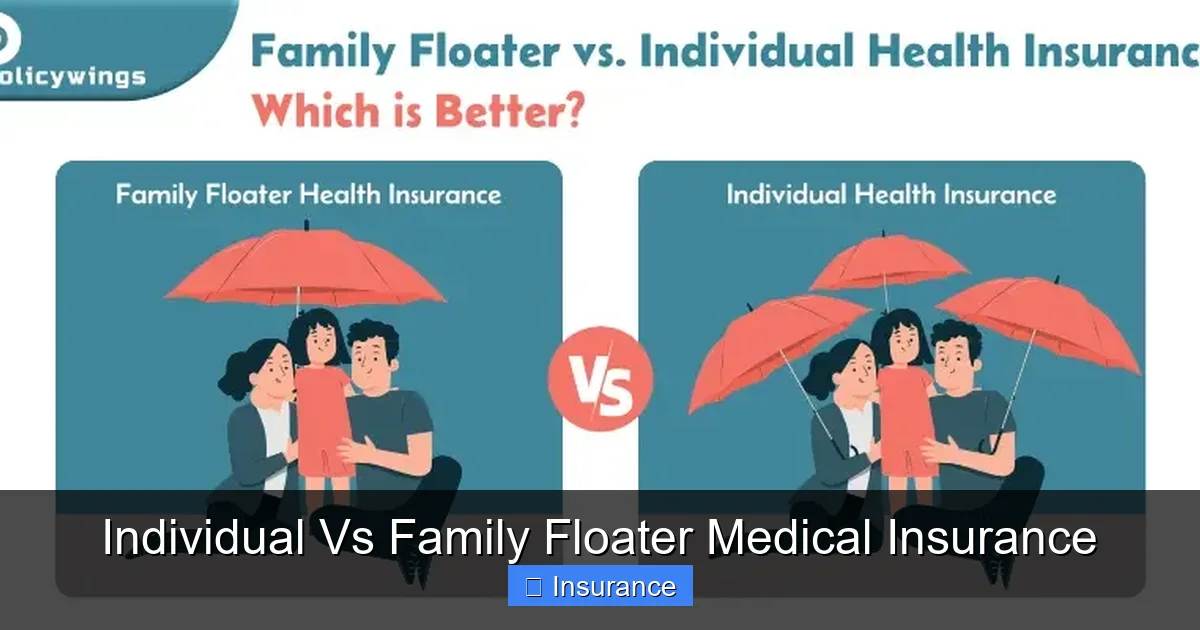
An individual floater medical insurance plan is designed for a single person. It covers medical expenses for one individual—whether you’re a bachelor, a working professional, or a student. The sum insured is exclusively yours, and no one else can claim from it.
Visual guide about Individual Vs Family Floater Medical Insurance
Image source: policywings.com
This type of policy is straightforward: you pay a premium, and in case of hospitalization or treatment, the insurer reimburses up to your sum insured. There’s no sharing, no splitting, and no confusion about who gets what. It’s perfect if you live alone or prefer to keep your health coverage separate from your family’s.
Who Should Consider an Individual Policy?
- Single individuals: If you’re unmarried, childless, or simply prefer personal coverage, an individual plan is a clean, no-fuss option.
- Students: College students often opt for individual policies to cover their own medical needs without involving family.
- Young professionals: Those just starting their careers may not yet have dependents, making individual coverage sufficient.
- Parents not living with children: If your children are grown and independent, you might not need a family plan.
However, individual policies come with limitations. You can’t include your spouse or children. If your partner gets sick, you’d need a separate policy. This lack of inclusivity can become a problem as your life changes.
Pros and Cons of Individual Floater Plans
Pros:
- Simplicity: Easy to understand—no shared limits or complex claims for multiple people.
- Lower premium: Since only one person is covered, premiums are generally cheaper than family floaters.
- No sharing of sum insured: Your full coverage amount is available to you, with no risk of it being used up by others.
- Portability: Many insurers allow you to port your policy when switching jobs or relocating.
Cons:
- No family coverage: Spouse and children must be covered separately, increasing overall costs.
- Not future-proof: As your family grows, you’ll need to buy new policies, which can be expensive.
- No tax benefit for dependents: If your spouse or kids are on your policy, you might miss out on tax deductions under Section 80D.
Family Floater Medical Insurance: The Full-Coverage Option
A family floater medical insurance plan is built for families. It covers you, your spouse, and your dependent children under a single policy. Some insurers also allow inclusion of parents or in-laws, depending on the plan. The key feature is the shared sum insured—everyone benefits from the same coverage limit.

Visual guide about Individual Vs Family Floater Medical Insurance
Image source: thebusinessthought.com
This model is especially popular in India, where joint families and nuclear families alike rely on shared resources. With a family floater, you get comprehensive protection without the hassle of managing multiple policies. One premium, one renewal date, one claim process—it’s designed for real family life.
What’s Included in a Family Floater?
Most family floater plans cover:
- Self: You, the policyholder.
- Spouse: Your husband or wife.
- Children: Dependent unmarried children, usually up to a certain age (often 25 if studying).
- Parents: Some insurers allow parents to be added, especially if they’re financially dependent.
For example, a typical family of four—father, mother, son, and daughter—can be covered under one ₹10 lakh floater plan. If the father needs heart surgery (₹6 lakh), the mother can still use the remaining ₹4 lakh if she needs treatment later. This shared pool makes it efficient and cost-effective.
Who Benefits Most from a Family Floater?
- Dual-income families: Both parents working can share one policy, reducing paperwork and premium costs.
- Young families: Parents with small children who want to protect the whole unit.
- Families with elderly parents: If parents are included, medical emergencies are covered without extra policies.
- Those planning for future: If you’re expecting a baby, a family floater can easily include newborns.
But even if you’re single now, consider a family floater if you’re planning to marry or have kids soon. It’s easier and cheaper to start early than to switch later.
Pros and Cons of Family Floater Plans
Pros:
- Affordable per person: The cost per family member is lower than individual policies.
- Comprehensive coverage: Everyone is protected under one umbrella.
- Tax benefits: Premiums paid qualify for deductions under Section 80D (up to ₹25,000 for self, spouse, and children; extra for parents).
- No need for multiple renewals: One policy, one renewal date—less hassle.
- Flexible add-ons: Many insurers offer wellness benefits, cashless hospitalization, and OPD coverage.
Cons:
- Shared sum insured: If one member uses most of the coverage, others may not have enough left.
- Harder to claim: Some insurers have strict rules on claim approval, especially for pre-existing conditions.
- Not ideal for large families: If you have 5+ members, the sum insured might not be enough.
- Exclusions apply: Pregnancy, maternity, and certain pre-existing conditions may not be covered initially.
Key Differences: Individual vs Family Floater
Now that you understand both policies, let’s compare them side by side. The differences go beyond just who is covered—they affect cost, flexibility, claims, and long-term value.
1. Coverage Scope
Individual: Covers one person only. No dependents included.
Family Floater: Covers 2–6 family members, depending on the insurer.
2. Sum Insured Sharing
Individual: Full sum insured is yours alone. No sharing.
Family Floater: The sum insured is pooled. Once used, the balance is reduced for everyone.
3. Premium Cost
Individual: Lower premium since only one person is covered.
Family Floater: Higher initial premium, but lower per-person cost. Example: A ₹5 lakh family floater for 4 people costs ₹8,000/year, while 4 individual ₹5 lakh policies cost ₹35,000/year.
4. Claim Process
Individual: Simple—one claim per policyholder.
Family Floater: Claims are processed under one policy, but the sum insured is shared. Reimbursement depends on remaining balance.
5. Flexibility and Upgrades
Individual: Easy to upgrade or switch plans as your life changes.
Family Floater: Can be upgraded to include newborns or parents, but changing members mid-term may not be allowed.
6. Ideal Use Cases
Individual: Singles, students, young professionals, or those with no dependents.
Family Floater: Married couples, parents, growing families, or anyone wanting full coverage.
How to Choose Between Individual and Family Floater
Making the right choice depends on your lifestyle, family size, and financial situation. Here’s a practical guide to help you decide.
Step 1: Assess Your Family Size
If you’re single or live alone, an individual plan makes sense. But if you have a spouse and children, a family floater is almost always better. Even a couple without kids might consider a floater for future-proofing.
Step 2: Evaluate Your Sum Insured Needs
Estimate your medical expenses. A ₹5 lakh floater may suffice for a small family, but a large family or someone with chronic illness might need ₹10 lakh or more. Don’t skimp—underinsuring is riskier than overinsuring.
Step 3: Compare Premiums and Benefits
Use online insurance comparison tools to see premiums for both options. Factor in add-ons like OPD coverage, ambulance charges, and daycare procedures. A slightly higher premium for a family floater might save you thousands in the long run.
Step 4: Check for Portability and Renewability
Choose insurers with good portability (switching without losing benefits) and no-claim bonuses. Some policies increase your sum insured if no claims are made, which is great for long-term planning.
Step 5: Consider Future Life Changes
Are you planning to marry, have kids, or care for aging parents? A family floater can adapt. Starting early means lower premiums and broader coverage from day one.
Real-Life Example: When a Family Floater Saved the Day
Rajesh, a 38-year-old engineer, chose a ₹10 lakh family floater for his wife and two daughters. When his younger daughter was diagnosed with asthma, she needed frequent hospital visits. The policy covered all treatments under the shared sum. Later, Rajesh himself needed knee surgery. Thanks to the floater, the claim was processed smoothly, and the family didn’t dip into their savings. Without the family plan, they would have needed separate policies—costing 3x more and offering less flexibility.
Tips for Maximizing Your Floater Policy
No matter which policy you choose, here are some tips to get the most value:
- Choose the right sum insured: Base it on average hospital costs in your city. In metro cities, ₹10 lakh is often recommended.
- Include all dependents: Don’t exclude your spouse or children to save on premium—it defeats the purpose.
- Renew on time: Avoid lapses. Set reminders for renewal dates.
- Use cashless hospitals: Most insurers have a network. Use them to avoid upfront payments.
- Keep documents ready: Have medical records, ID proofs, and bills organized for quick claims.
- Review annually: Life changes. Reassess your coverage every year.
Conclusion: Make the Smart Choice for Your Family’s Health
Choosing between individual and family floater medical insurance isn’t about picking the cheapest option—it’s about finding the right balance of protection, affordability, and flexibility. While individual policies suit singles and young professionals, family floater plans offer unmatched value for growing families. They cover everyone under one roof, share a sum insured efficiently, and often come with better tax benefits and lower per-person costs.
Remember, health insurance is an investment in peace of mind. A small premium today can prevent a financial crisis tomorrow. Whether you’re just starting out or raising a family, take the time to compare policies, read the fine print, and choose a plan that grows with you. With the right floater policy, you’re not just buying insurance—you’re building a safety net for your loved ones.
Frequently Asked Questions
Can I switch from an individual to a family floater policy?
Yes, most insurers allow you to upgrade from an individual to a family floater. You’ll need to pay the difference in premium and submit documents for your spouse and children. It’s a smart move if your family grows.
Is maternity coverage included in family floater plans?
Not always. Some plans cover maternity after a waiting period (usually 2–4 years), while others exclude it entirely. Check the policy details or opt for a plan that includes it if you’re planning a family.
Can parents be added to a family floater?
Yes, many insurers allow parents to be included in the floater, especially if they’re financially dependent. The sum insured is shared, so ensure it’s enough for everyone’s needs.
What happens if the sum insured is used up by one member?
The remaining family members can still use the leftover amount. But if the full sum is exhausted, no further claims are covered until the next policy year or renewal.
Are pre-existing diseases covered in floater plans?
Usually not immediately. Most policies have a waiting period of 2–4 years for pre-existing conditions. After that, they are covered, but check the exact terms.
Can I claim for OPD treatment under a floater policy?
Many modern floater plans now include OPD (outpatient) coverage, but it depends on the insurer. Look for plans with OPD benefits or rider add-ons to avoid out-of-pocket expenses.


