 Durba TV academic Website
Cashless medical insurance is a game-changer in healthcare financing. Instead of paying out-of-pocket and waiting for reimbursement, you get direct treatment at network hospitals—no cash, no hassle. It’s faster, simpler, and helps you avoid unexpected medical bills.
Key Takeaways
- What is cashless medical insurance? It allows policyholders to receive medical treatment at network hospitals without upfront cash payment, with costs directly settled by the insurer.
- How does it work? You just need to carry your insurance card and ID to a network hospital, inform the insurer, and treatment proceeds with the hospital billing the insurer directly.
- Who qualifies? Most health insurance plans include cashless facilities, but coverage depends on your policy terms, pre-authorization, and the hospital’s network status.
- Benefits include: No out-of-pocket expenses during treatment, faster access to care, reduced financial stress, and seamless claim processing.
- Limitations to know: Not all hospitals are in-network, some treatments may need pre-approval, and certain procedures might not be covered under the policy.
- Tips to maximize benefits: Keep your insurance card handy, verify network hospitals before traveling, and always get pre-authorization for major treatments.
📑 Table of Contents
- Cashless Medical Insurance Benefits Explained
- What Is Cashless Medical Insurance?
- How Cashless Medical Insurance Works: A Step-by-Step Guide
- Top Benefits of Cashless Medical Insurance
- Who Can Use Cashless Medical Insurance?
- Common Limitations and How to Avoid Them
- Tips to Maximize Your Cashless Medical Insurance Benefits
- Real-Life Example: How Cashless Insurance Saved a Family
- Frequently Asked Questions (FAQs)
Cashless Medical Insurance Benefits Explained
Imagine this: You’re at home, suddenly feeling unwell. A sharp pain in your chest. Your heart starts racing. You rush to the hospital—only to realize you’ll need to pay a large sum upfront before receiving treatment. The stress, the delay, the worry—it’s overwhelming. Now, picture a different scenario: You arrive at the hospital, show your insurance card, and walk straight into treatment. No cash. No forms. Just care—fast and easy. This is the power of cashless medical insurance.
Today’s healthcare system can be expensive and confusing. Even with health insurance, many people face unexpected bills or long reimbursement delays. Cashless medical insurance solves these problems by letting you get treated at network hospitals without paying anything out of your pocket. The insurer pays the hospital directly. You walk out with a discharge summary, a bill from the insurer, and peace of mind. In this article, we’ll break down everything you need to know about cashless medical insurance—how it works, who it’s for, what it covers, and how to make the most of it.
What Is Cashless Medical Insurance?
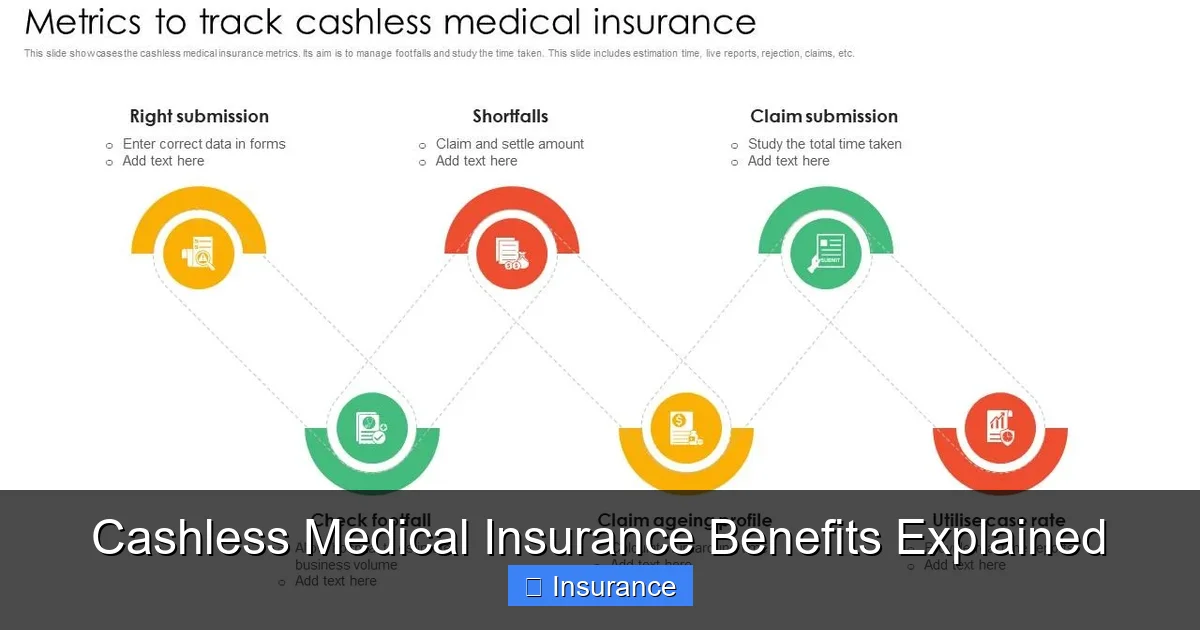
Cashless medical insurance is a feature offered by most health insurance providers. It allows you to receive medical treatment at a network hospital without paying anything upfront. Instead of handing over cash or credit card, you simply show your insurance card and identification. The hospital bills the insurance company directly. You don’t have to pay, and the insurer settles the claim—either fully or partially—based on your policy terms.
Visual guide about Cashless Medical Insurance Benefits Explained
Image source: slideteam.net
How It Differs From Reimbursement Claims
Many people confuse cashless insurance with reimbursement claims. Here’s the key difference: With cashless treatment, you don’t pay anything at the time of care. With reimbursement, you pay everything upfront, keep the bills, and later submit them to your insurer for refund. Cashless is faster and less stressful. Reimbursement can take weeks or months to process. Cashless is like paying with a credit card—the bill comes later, but you get care now.
Who Offers Cashless Facilities?
Most private and public health insurance plans offer cashless treatment. This includes:
- Employer-sponsored health plans
- Individual family health insurance policies
- Government health schemes (like Ayushman Bharat)
- Corporate group health insurance
To use cashless benefits, your hospital must be part of the insurer’s network. Always check your policy document or insurer’s website for a list of network hospitals.
How Cashless Medical Insurance Works: A Step-by-Step Guide
Using cashless medical insurance is simple. Here’s how it works in real life:
Visual guide about Cashless Medical Insurance Benefits Explained
Image source: chqup.com
Step 1: Verify Hospital Network Status
Before going to the hospital, confirm it’s part of your insurer’s network. You can check online, call customer service, or use the insurer’s mobile app. If it’s not in the network, you can still get treatment but will need to pay and later file a reimbursement claim.
Step 2: Get Pre-Authorization
For major treatments (like surgeries, cardiac procedures, or ICU stays), you must get pre-authorization. This is a formality where the insurer reviews your case, confirms coverage, and approves the claim. You can apply online or at the hospital’s billing office. Processing usually takes 24–48 hours.
Step 3: Visit the Hospital
Bring your insurance card, ID proof, and any medical records. Inform the hospital that you want cashless treatment. They’ll contact your insurer to verify your details and pre-approval status.
Step 4: Receive Treatment
Once verified, you can start treatment immediately. The hospital bills the insurer directly. You don’t pay a penny.
Step 5: Post-Treatment Verification
After discharge, the hospital sends the final bill to the insurer. The insurer reviews the claim, checks for any discrepancies, and settles the amount. If everything matches, the insurer pays the hospital. You may receive a discharge summary and a copy of the claim for your records.
Tip: Always carry your insurance card and ID. Even if you’ve used cashless before, the hospital needs to verify your identity and policy status.
Top Benefits of Cashless Medical Insurance
Cashless medical insurance isn’t just convenient—it’s a financial safety net. Here’s why it’s worth having:
Visual guide about Cashless Medical Insurance Benefits Explained
Image source: 1.bp.blogspot.com
1. No Upfront Financial Burden
Medical emergencies can drain your savings. With cashless insurance, you don’t have to worry about paying large sums before treatment. This is especially helpful for expensive procedures like heart surgery, cancer treatment, or organ transplants.
Example: Rajesh had a heart attack and needed an emergency angioplasty. His policy covered 90% of the cost. Instead of paying ₹2 lakh upfront, he walked into the hospital with his insurance card and received treatment immediately. The insurer paid ₹1.8 lakh. Rajesh only paid the 10% co-pay, which was ₹20,000—manageable and stress-free.
2. Faster Access to Care
Time is critical in emergencies. Cashless treatment means no waiting for approval or payment. You get treated right away. This is lifesaving in heart attacks, strokes, or accidents.
3. Reduced Financial Stress
Medical bills can cause panic. With cashless insurance, you avoid the shock of large payments. You know your insurer is covering most costs. This peace of mind lets you focus on recovery, not finances.
4. Transparent Billing
Network hospitals follow strict billing guidelines. The insurer reviews every bill for accuracy. This reduces the risk of overcharging or hidden fees. You get a clear, itemized bill from the hospital and a final settlement from the insurer.
5. No Reimbursement Hassles
Reimbursement claims require receipts, discharge summaries, and lengthy paperwork. Cashless avoids all that. You get treated, go home, and let the insurer handle the rest.
6. Coverage for Pre and Post-Hospitalization
Most cashless policies cover expenses before and after hospitalization. For example, you might get coverage for diagnostic tests (blood work, X-rays) taken 30 days before admission and for recovery care (rehabilitation, medications) up to 60 days after discharge.
Who Can Use Cashless Medical Insurance?
Almost anyone with a health insurance policy can use cashless facilities—but there are conditions:
Eligible Individuals
- Policyholders (individuals or families)
- Employees under group health plans
- Dependents listed in the policy (spouse, children)
- Senior citizens with appropriate plans
Conditions That Apply
- The treatment must be medically necessary
- The hospital must be in the insurer’s network
- Pre-authorization is required for major treatments
- Coverage depends on your policy’s sub-limits and exclusions
Note: Even if you’re eligible, not all treatments are covered. Always check your policy document for exclusions (e.g., cosmetic surgery, dental care, infertility treatments).
Common Limitations and How to Avoid Them
Cashless medical insurance isn’t perfect. Here are common pitfalls and how to avoid them:
1. Not All Hospitals Are Network Hospitals
Using a non-network hospital means you’ll need to pay and later file a reimbursement claim. To avoid this:
- Check the insurer’s website or app for network hospitals
- Call customer service before traveling
- Use the insurer’s helpline number at the hospital
2. Pre-Authorization Delays
Some hospitals delay pre-authorization. To speed things up:
- Apply online via the insurer’s portal
- Call the insurer directly
- Carry your policy number and ID
3. Sub-Limits and Caps
Many policies have sub-limits—for example, ₹50,000 for room rent or ₹1 lakh for ICU. If you exceed these, you pay the difference. To avoid surprises:
- Read your policy document
- Ask your insurer about sub-limits
- Choose a plan with higher sub-limits
4. Exclusions
Not all treatments are covered. Common exclusions include:
- Pre-existing diseases (after waiting period)
- HIV/AIDS, mental illness (in some policies)
- Self-inflicted injuries, war, nuclear accidents
- Experimental treatments or alternative medicine
Always review your policy’s exclusions before treatment.
5. Claim Rejections
Claims can be rejected for reasons like:
- Missing pre-authorization
- Treatment at a non-network hospital
- Procedures not covered under the policy
- Incomplete documentation
To reduce rejections:
- Get pre-authorization in writing
- Keep all medical records
- Confirm coverage before treatment
Tips to Maximize Your Cashless Medical Insurance Benefits
Here’s how to get the most out of your cashless coverage:
1. Keep Your Insurance Card Handy
Always carry your insurance card and a government ID (Aadhaar, passport, driving license). Even if you’ve used it before, hospitals need to verify your identity.
2. Verify Network Status Before Traveling
If you’re traveling for work or leisure, confirm the hospital is in your insurer’s network. Use the insurer’s mobile app or website to search by location.
3. Get Pre-Authorization for Major Treatments
Don’t skip this step. For surgeries, ICU stays, or critical care, pre-authorization is mandatory. Apply online or call the insurer’s helpline.
4. Understand Your Policy’s Coverage
Read your policy document. Know your sum insured, sub-limits, waiting periods, and exclusions. If you don’t understand, ask your insurer or agent.
5. Use the Insurer’s Customer Service
Most insurers have 24/7 helplines. Call if you’re unsure about coverage, network hospitals, or claim status. They can guide you through the process.
6. Maintain Good Health Records
Keep digital copies of medical reports, prescriptions, and bills. This helps during claims and future treatments.
7. Renew Your Policy on Time
Expired policies lose cashless benefits. Set reminders to renew before your policy expires. Some insurers offer grace periods, but it’s safer to renew early.
Real-Life Example: How Cashless Insurance Saved a Family
Meena’s father had sudden chest pain and was rushed to a private hospital. The doctor suspected a cardiac event. Meena had a family health insurance policy with a ₹5 lakh sum insured and cashless coverage.
She showed her insurance card and ID at the hospital. The hospital verified her policy and pre-authorized the cardiac catheterization. The treatment cost ₹4.2 lakh. Meena’s insurer paid ₹3.78 lakh (90% coverage). Meena paid the remaining 10% (₹42,000) from her savings.
Because of cashless treatment, Meena’s father received immediate care. No delays. No financial panic. Meena later received a discharge summary and claim settlement letter. She filed no reimbursement forms. The entire process took just 5 days.
This is the power of cashless medical insurance—fast, fair, and stress-free.
Frequently Asked Questions (FAQs)
Can I use cashless insurance for minor treatments like fever or cold?
Yes, you can use cashless for minor treatments at network hospitals. However, for small expenses (like ₹500 for fever medicine), reimbursement might be faster and easier. Always check if the hospital is in-network.
What happens if the hospital demands cash even though I have insurance?
This is a red flag. Legitimate network hospitals cannot demand cash for insured treatments. If this happens, contact your insurer’s customer service immediately. They can intervene and ensure proper billing.
Is cashless insurance available for outpatient treatments?
Yes, but coverage depends on your policy. Some insurers cover outpatient treatments (like consultations, lab tests) at network hospitals. Check your policy for outpatient benefits.
Can I switch from cashless to reimbursement if I prefer?
No, cashless and reimbursement are two different options. If you use a non-network hospital or miss pre-authorization, you must pay and later file a reimbursement claim. Cashless is only available at network hospitals with pre-approval.
Are there any taxes on cashless medical insurance claims?
No, cashless claims are tax-free under Section 80D of the Income Tax Act. Premiums paid for health insurance are tax-deductible up to ₹25,000 (₹50,000 for senior citizens).
What should I do if my cashless claim is rejected?
First, contact your insurer to understand the reason. Common reasons include missing documents, non-network hospital, or uncovered treatment. If rejected unfairly, you can file an appeal or escalate to the insurance ombudsman.
Frequently Asked Questions
Can I use cashless insurance for minor treatments like fever or cold?
Yes, you can use cashless for minor treatments at network hospitals. However, for small expenses (like ₹500 for fever medicine), reimbursement might be faster and easier. Always check if the hospital is in-network.
What happens if the hospital demands cash even though I have insurance?
This is a red flag. Legitimate network hospitals cannot demand cash for insured treatments. If this happens, contact your insurer’s customer service immediately. They can intervene and ensure proper billing.
Is cashless insurance available for outpatient treatments?
Yes, but coverage depends on your policy. Some insurers cover outpatient treatments (like consultations, lab tests) at network hospitals. Check your policy for outpatient benefits.
Can I switch from cashless to reimbursement if I prefer?
No, cashless and reimbursement are two different options. If you use a non-network hospital or miss pre-authorization, you must pay and later file a reimbursement claim. Cashless is only available at network hospitals with pre-approval.
Are there any taxes on cashless medical insurance claims?
No, cashless claims are tax-free under Section 80D of the Income Tax Act. Premiums paid for health insurance are tax-deductible up to ₹25,000 (₹50,000 for senior citizens).
What should I do if my cashless claim is rejected?
First, contact your insurer to understand the reason. Common reasons include missing documents, non-network hospital, or uncovered treatment. If rejected unfairly, you can file an appeal or escalate to the insurance ombudsman.


